
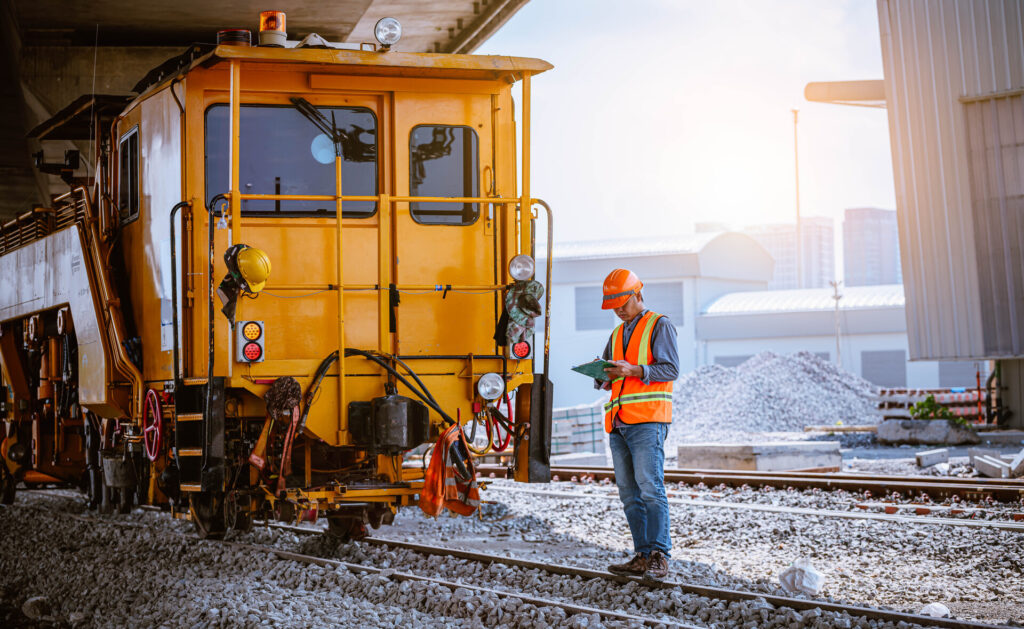
The Egnatia Railway is a 565-km long new rail corridor proposed by the Greek government, and it is expected to become a key part of the European Union’s rail infrastructure
Strategic Importance for Greece
The Egnatia Railway Project is expected to strengthen Greece’s internal rail connectivity by linking the nation’s eastern and western regions through a continuous corridor, while also positioning Greece as a key logistical hub in the region by improving rail access between major ports, industrial zones, and border crossings, and by connecting Greece with the Republic of North Macedonia, Bulgaria, and Turkey. Additionally, the project is expected to contribute to Greece’s environmental sustainability targets by reducing reliance on fossil-fuelled freight trucks.
Role in the European Union Transport Network
The project is expected to become a key component of the European Union’s transport network by strengthening Southern Europe’s east–west connectivity. As a planned part of the EU’s Adriatic Intermodal Corridor and the Trans-European Transport Network (TEN-T), the project aims to improve economic activities in the region. Also, by encouraging a shift from road to rail, the corridor would also contribute to the European Union’s sustainability and climate objectives.
Economic Impact
Although the Egnatia Railway project is still in the planning and development phases, investments related to the project have begun, and these investments indicate significant long term benefits of the project aligned with the project’s objectives. The Greek government has secured approximately €1.5 billion to upgrade and modernise existing lines as part of the mega project, which is expected to stimulate domestic and international trade. In addition to this investment secured by Greece, there is a €760 million rail investment framework agreed between Greece and Italy supporting freight movement and cross-border logistics over the long run.
According to OECD analyses, sustained investment in rail networks can lower logistics costs, reduce congestion, and stimulate regional economic growth by encouraging a modal shift from road to rail. Taken together, these developments suggest that a fully realised Egnatia Railway could generate economic benefits by improving competitiveness, attracting investment, and reinforcing Greece’s role within European trade corridors.
Conclusion
The Egnatia railway represents significant strategic and economic benefits for Greece and Europe by strengthening regional connectivity, supporting sustainable freight transport, and enhancing Greece’s role as a logistical gateway between Europe and neighbouring states. The project is expected to stimulate long-term economic and environmental benefits.
Bibliography
- https://ec.europa.eu/ten/transport/priority_projects_minisite/PP29EN.pdf
- https://www.oecd.org/en/publications/oecd-economic-surveys-greece-2024_a35a56b6-en/full-report/
- https://www.railtarget.eu/business/greece-italy-eu-rail-investment-2025-modernisation-10592.html
- https://news.gtp.gr/2025/01/30/greeces-railway-network-set-for-upgrades-with-e1-5-billion-investment/