
1. What Are Black Holes and How Are They Formed
1.1 What is a black hole?
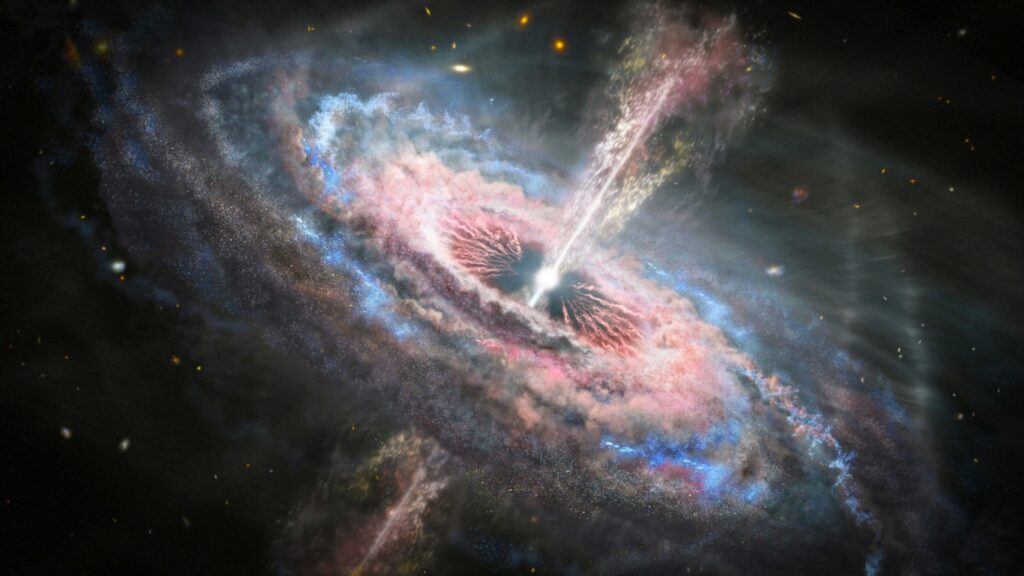
In astrophysics, a black hole is a celestial body whose gravitational field is so strong that it swallows all matter, even light. Black holes also have the kind of density and power that can even manipulate space-time.
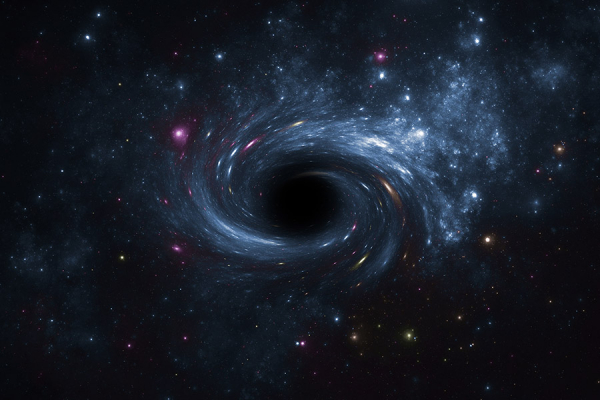
Visual 1.1 Source: bilimgenc.tubitak.gov.tr
In Figure 1.1 above, Gaia BH1 is the closest of the known black holes to Earth.
1.2.1 What is a supernova explosion?
Inside stars there is a fusion reaction. This is simply the fusion of two lighter atoms to form a larger atom. For example, two hydrogen atoms fuse to form the heavier element helium. Many heavy atoms are also produced in stars by these reactions. However, since these fusion reactions release a tremendous amount of energy outwards, gravity is used to stabilise it. This balance is called “Hydrostatic Equilibrium” in astrophysics. However, when the fuel (atom) for this fusion reaction runs out, gravity starts to dominate and the hydrostatic balance is broken. As a result, the volume of the star starts to shrink due to gravity. As you have seen in school, the density of a substance whose volume is reduced increases. In this way, the star begins to shrink and when its atoms can no longer be squeezed any more, the atoms of the star push each other and the event called supernova explosion occurs. In a supernova explosion, the atoms and energy released by the fusion reaction of the star are scattered around. In other words, the supernova explosion creates nebulae containing fuel and energy for new stars to be formed.
1.2.2 How do black holes form?
If the normal state of the star is 20 times the mass of the Sun, a supernova explosion can produce a black hole. In the case of a black hole, most of the mass of the star is still spent on nebulae, but with the remaining mass, the atoms are compressed and the density increases as the volume decreases, and this object bends the fabric of space-time incredibly due to its density. This creates a celestial body called a black hole.
2. Parts of a Black Hole
As shown in Figure 2.1, a black hole consists of two main parts: the event horizon and the singularity.
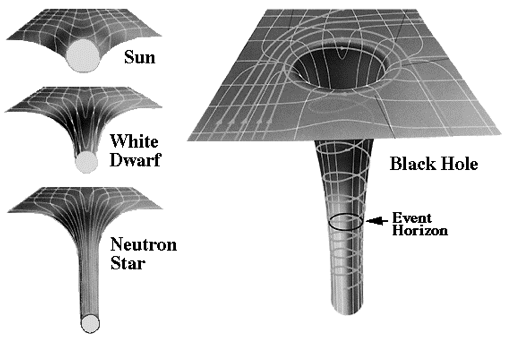
Image 1.2 Source: oggito.com
As can be seen in Figure 1.2 above, the difference in the spacetime bending of black holes compared to neutron stars resulting from the supernova of other massive stars, white dwarfs resulting from small-mass stars, and the Sun.
2.1 Event horizon
The event horizon is actually a turning point of the black hole where even light cannot escape. In other words, the observer who crosses this boundary will never be able to get out again. The reason for this is that the speed required to escape must be equal to the speed of light, and according to the theory of relativity, no object can move at the speed of light.
2.2 Singularity
The gravitational singularity cannot be fully explained at present. However, the accepted theory is that gravity at the singularity is infinite.
3. Albert Einstein’s Black Hole Theory
3.1 General Theory of Relativity
In fact, everything we talk about in this article is based on this theory. This theory was discovered by Albert Einstein in 1916. In this theory, what is meant by the bending of the space-time fabric, which we take as a fabric, is that the theory of gravitation put forward by Newton is wrong. According to Einstein, instead of the theory of gravitation, small-mass objects move in the orbit of large-mass objects thanks to the bending created in the space-time fabric by large-mass objects.
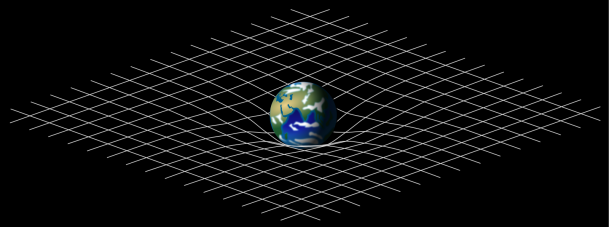
Image 3.1 Source: Wikipedia.org
In Figure 3.1, the Earth creates a bend in the fabric called space-time thanks to its mass. This is precisely why Albert Einstein’s theory can explain the existence of black holes and many other celestial bodies.
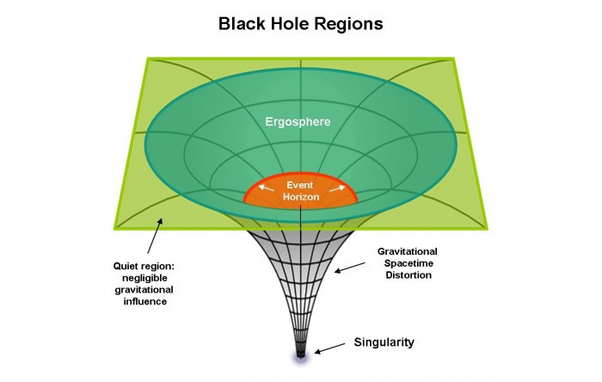
Image 2.1 Source: zaferdergisi.com
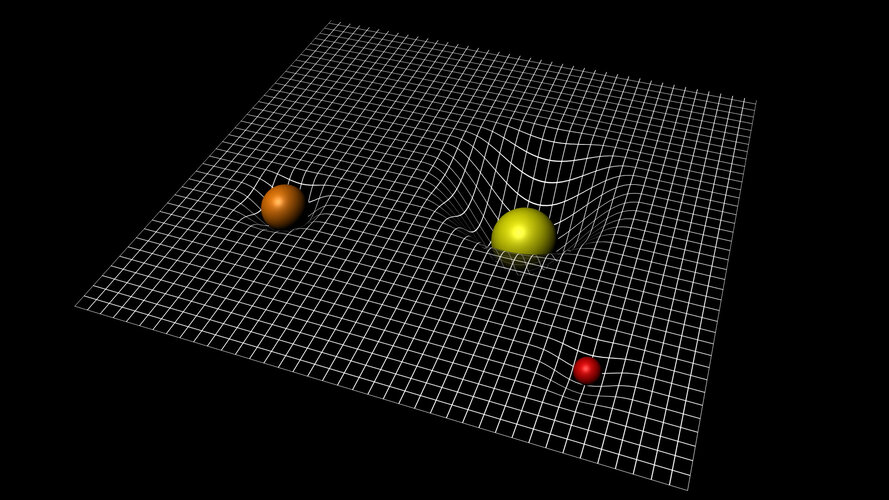
Image 3.2 Source: astapera.com
4. Types of Black Holes
4.1 Stellar Black Holes
As the name suggests, this type of black hole is formed as a result of the death of the stars, in other words, the exhaustion of the fuel to be burnt. In other words, the formation in the “Formation of Black Holes” section we have described above belongs to stellar black holes. Our reason for explaining this is that this is the type that we actually know as black holes and that generally exists in the universe.
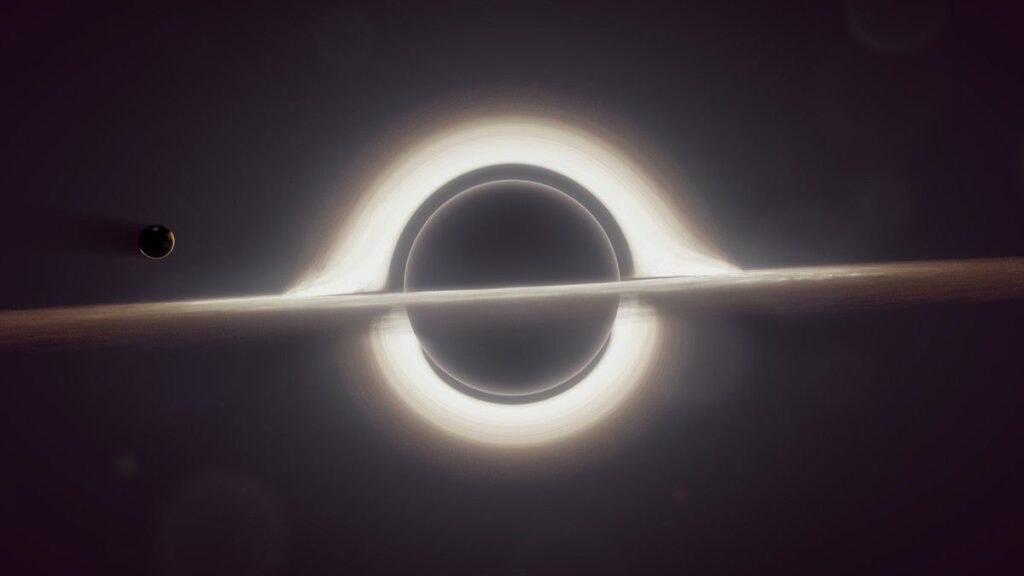
Image 4.1 Source: evolutionagaci.org
Figure 4.1 Representative photograph of a black hole
4.2 Giant Black Holes
Black holes are named according to the size of their event horizon. To return to giant black holes, these black holes are usually found at the centres of galaxies and have a mass billions of times more than the Sun. For example, if we take the first photographed black hole, the giant black hole in the M87 Galaxy, its mass is approximately 5.4 billion solar masses.
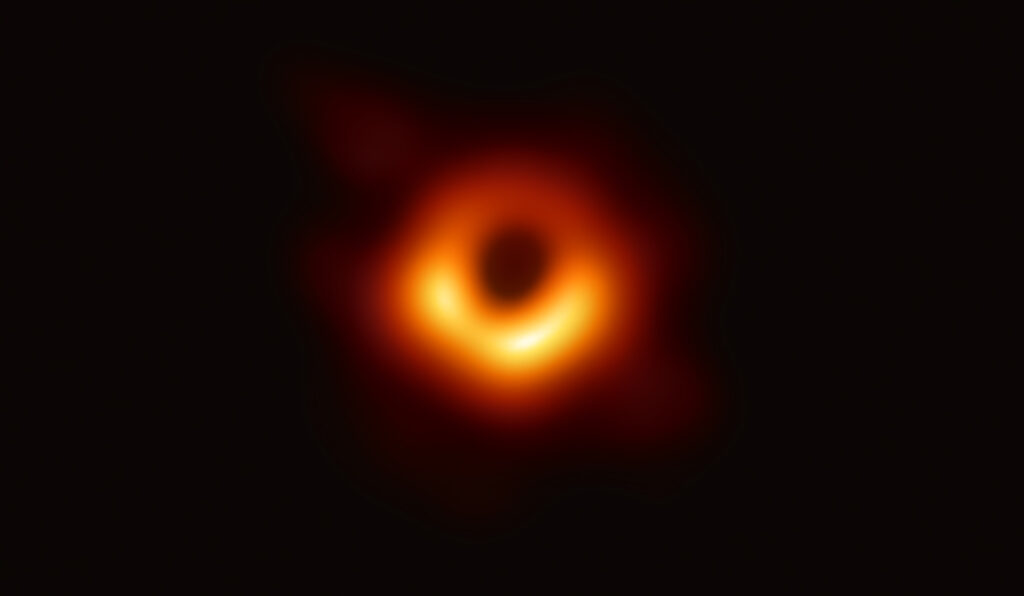
Image 4.2 Source: brittanica.com
Image 4.2 Photograph of black hole M87
Image 4.2 above is a photograph of the black hole in the M87 (Messier 87) galaxy. It is also the first photograph ever taken of a black hole.
According to Jeremy Schnittman, a theoretical physicist at NASA, with the help of the Hubble Space Telescope, there are now more than 100 giant black holes confirmed by data and known to exist.
For a more recent example, we can take the Sagittarius A black hole in our Milky Way Galaxy.
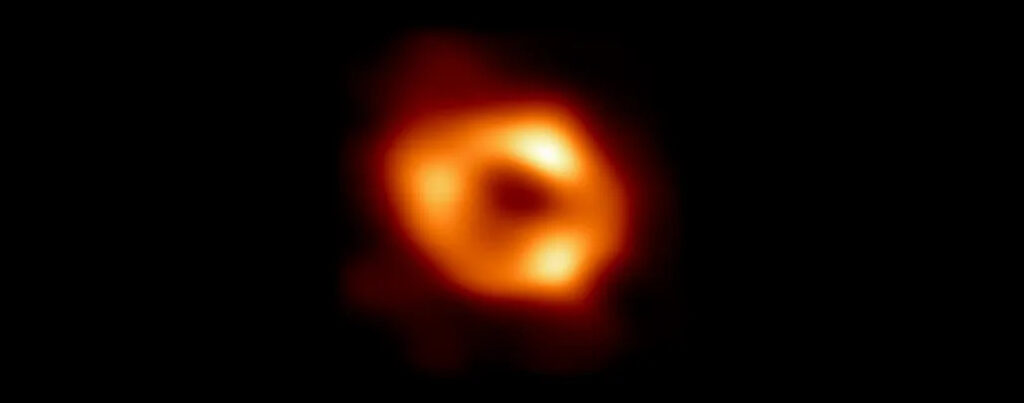
Image 4.3 Source: news.mit.edu
Image 4.3 Sagittarius A supermassive black hole
According to the information obtained from these black holes, supermassive, that is, giant black holes generate enormous amounts of X-rays.
4.3 Medium Black Holes
Intermediate black holes are one of the rarest types of black holes. Although we cannot definitively prove their existence according to the information we have at the moment, it is predicted by scientists that they are formed as a result of the collision and merger of two stellar black holes. Their masses are assumed to be about 100-100,000 solar masses.
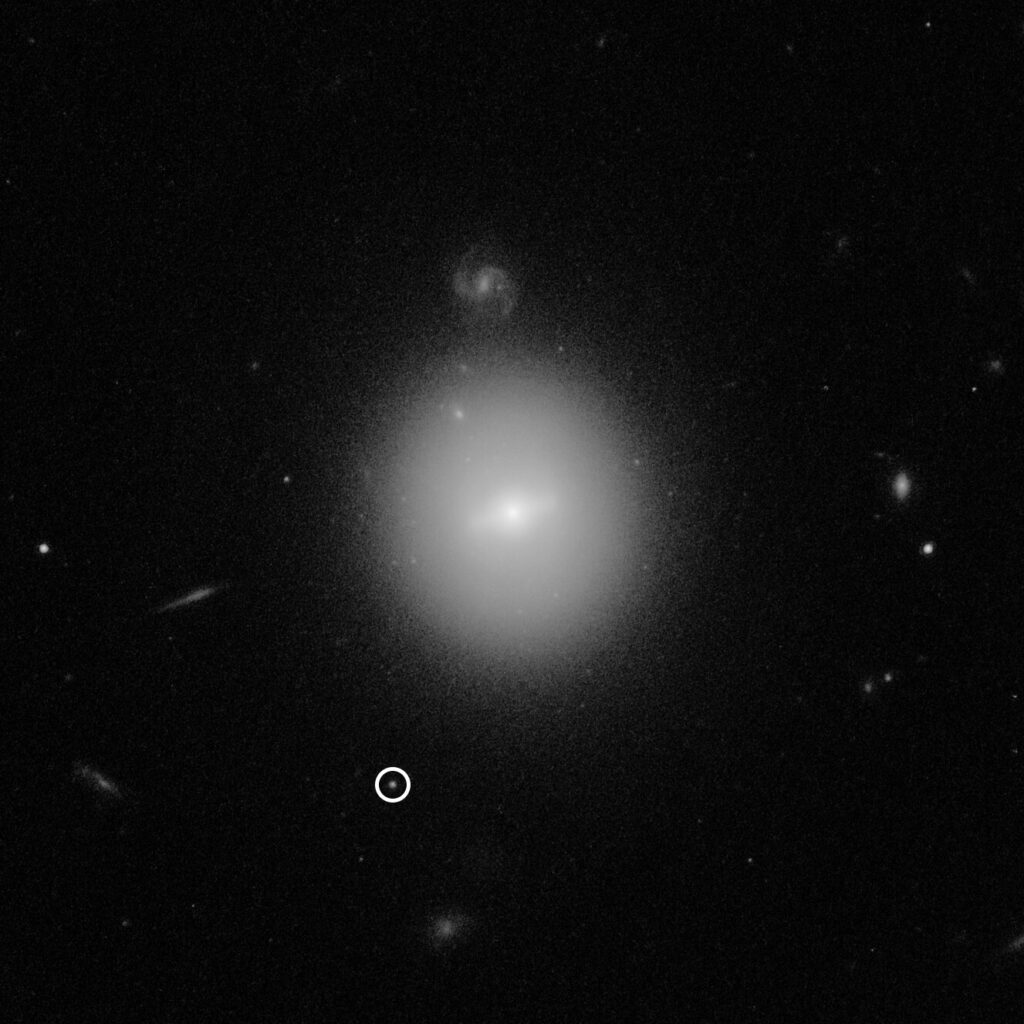
Image 4.4 Source: NASA, ESA and D. Lin (University of New Hampshire)
Figure 4.4 Intermediate-mass black hole
Figure 4.4 shows a possible intermediate-mass black hole with a mass 50,000 times that of the Sun, according to data from the Hubble Space Telescope.
4.4 Primordial Black Holes
Primordial black holes are the most different among black holes because this type is assumed to have formed immediately after the big bang. We will analyse this type in detail under a different title.
5. What Does the Size of a Black Hole Depend On?
5.1 Schwarzschild Radius
The Schwarzschild radius represents the radius of the atoms of a substance at maximum compression. In other words, if the mass is squeezed into the Schwarzschild radius, nothing can prevent that matter from collapsing into the space singularity. This formula Rg = 2GM/c2
It’s here:
- (Rg ) Schwarzschild radius
- M Mass
- G is the universal gravitational constant
- c Speed of light
As a result, the size of the black hole depends on the Schwarzschild radius.
6. Hawking’s Black Hole Theory and Primordial Black Holes
6.1 Primordial Black Holes
The black holes with the lowest masses are assumed to have been created during the big bang and are called primordial black holes or primordial black holes. They were first proposed by Zeldovich and Novikov in 1966, and then in 1971, Stephen Hawking was the first to investigate their origins and how they were formed, but their existence has not been proven. In September 2022, they were re-evaluated by some researchers to explain the large early galaxies discovered by the James Webb Space Telescope.
Primordial black holes were not formed as a result of the death of stars, as they were formed before the existence of stars, and they are not limited to the mass range of stellar black holes, i.e. they can be of any size. They are hypothesised to result from the formation and subsequent gravitational collapse of bound states of stable supermassive elementary particles during the early radiation period. The proposed mechanism for their formation is the gravitational collapse of high-density regions resulting from quantum fluctuations during the explosion. As the universe expanded exponentially during the explosion, small quantum fluctuations grew larger, leading to certain regions of higher density. If these regions exceed a certain limit, gravitational collapse can lead to the formation of primordial black holes.
Hawking radiation or Hawking radiation is the theoretical radiation that Stephen Hawking, who gave his name to blackbody radiation, suggested that black holes should emit. If a particle carrying negative energy is absorbed by the black hole, the total energy of the black hole, and thus its mass, decreases. As a result, the black hole becomes smaller and smaller by spreading the energy around. Accordingly, any black hole with a mass of m grams should emit particles like a black body at a temperature of 10^26 m^-1 K. This means that any black hole must eventually evaporate, and a very small black hole would evaporate so fast that it would explode. Presumably, with Hawking’s prediction, this means that primordial black holes with a mass of about 10^15g could be exploding today, and quantum theory in which this is not true is faulty and makes no sense.
The information inside a black hole cannot come out, energy and information are one, they cannot be separated and black holes cannot destroy energy, instead they store it as mass. Therefore, the only way to be in Hawking radiation is to copy the information inside. Having two copies of information, one inside and one outside, violates quantum theory and becomes a paradox.
Primordial black holes smaller than 10^15g would have already evaporated. Studies of such results have been used to explain some properties of evaporating primordial black holes, but there are other possible explanations for these properties, so there is no conclusive evidence for the evaporation of primordial black holes.
When we look at primordial black holes larger than 10^15 g that are not affected by Hawking radiation, such primordial black holes may have implications such as providing seeds for supermassive black holes in galactic nuclei, as well as providing dark matter that constitutes 25% of the critical density, an idea that dates back to the early days of their research. Primordial black holes are not subject to the big bang nucleosynthesis constraint because they were formed during the radiation-dominated era. They should therefore be classified as non-baryonic and behave like cold dark matter species. However, this does not provide any evidence that primordial black holes harbour dark matter or that dark matter is real.
6.2 Hawking Black Hole Theories
6.2.1 The black hole (information) paradox
This paradox arose after Hawking theorised Hawking Radiation. According to the theory, it is related to where the swallowed information goes after the black hole vaporises and disappears. If the information disappeared along with the black hole, this would violate the law of conservation of mass and quantum theory, because in quantum theory, when you add up the probabilities of all possible events, we should see that the sum is equal to one. This leads us to the conclusion that in quantum theory, information can never really disappear or really be copied. We should always be able to determine from complete information how a system starts and how it ends. An Information is defined as the quantum properties of elementary particles and their states in space-time. Whether black holes erase the data, i.e. information, in the universe is still a subject that has not been found.
6.2.2 Hawking field theorem
The amount of thermal energy not available for useful work per unit temperature in a system is called entropy. The Hawking field theorem states that the area of the event horizon of a black hole is always increasing and never decreasing, based on the knowledge that disorder or entropy cannot decrease over time, but that entropy is constantly increasing. Every particle and atomic structure is accelerating through time and space, so entropy must be constantly increasing. The entropy of a black hole is related to its area.
Bibliography
- sciencedirect.com/science/article/pii/ S0370269321004081
- iopscience.iop.org/article/10.1088/1742-6596/2429/1/012033/pdf#:~:text=Black%2520Holes%2520evaporation%2520consists%2520of,Hole%2520mass%252C%2520spin%2520and%2520charge
- articles.adsabs.harvard.edu/pdf/1976ApJ…206….8C
- arxiv.org/abs/1607.06077
- bbc.com/turkce/haberler-dunya-43398999#
- evrimagaci.org/hawking-radyasyonu-nedir-kara-deliklerzamanla-buharlasip-yok-oluyor-olabilir-mi-10305
- evrimagaci.org/soru/enformasyon-paradoksu-icin-bir-bilgiverebilir-misiniz-49847
- fizikist.com/stephen-hawkingin-kara-delikler-uzerinefikirlerinden-biri-gozlemsel-olarak-dogrulandi
- universe.nasa.gov/black-holes/types/
- news.mit.edu/2022/first-supermassive-black-holesagitarrius-0512
- space.com/milky-way-m87-black-holes-compared-eht
- science.nasa.gov/resource/first-image-of-a-black-hole/
- nasa.gov/universe/nasa-animation-sizes-up-theuniverses-biggest-black-holes/
- britannica.com/place/Virgo-A
- astronomy.com/science/black-holes-officially-spin/
- evrimagaci.org/kara-delik-nedir-kara-delik-nasilolusur-7748
- evrimagaci.org/stephen-hawking-ve-kara-delikler-bir-omreyayilan-bilim-aski-7796
- bilsenbesergil.blogspot.com/p/primordial-kara-delikprimordial-black.html#
- astronomi.itu.edu.tr/fizik/genel-gorelilik/
- astrapera.com/einstein-halkasi-nasil-olusur/
- haberturk.com/stephen-hawking-ve-einstein-in-karadelik-teorisi-nedir-kara-delik-nasil-olusur-2429923
- evrimagaci.org/soru/tekillik-nedir-nasil-olusur-38733 https://www.kozmikanafor.com/tekillik-nedir/
- physicsoftheuniverse.com/ topics_blackholes_singularities.html
- bilsenbesergil.blogspot.com/p/olay-ufku-event-horizon.html
- bilimgenc.tubitak.gov.tr/makale/karadelige-dusmek
- spacecampturkey.com/kara-delik-nedir
- bilimgenc.tubitak.gov.tr/konular/kara-delikler