
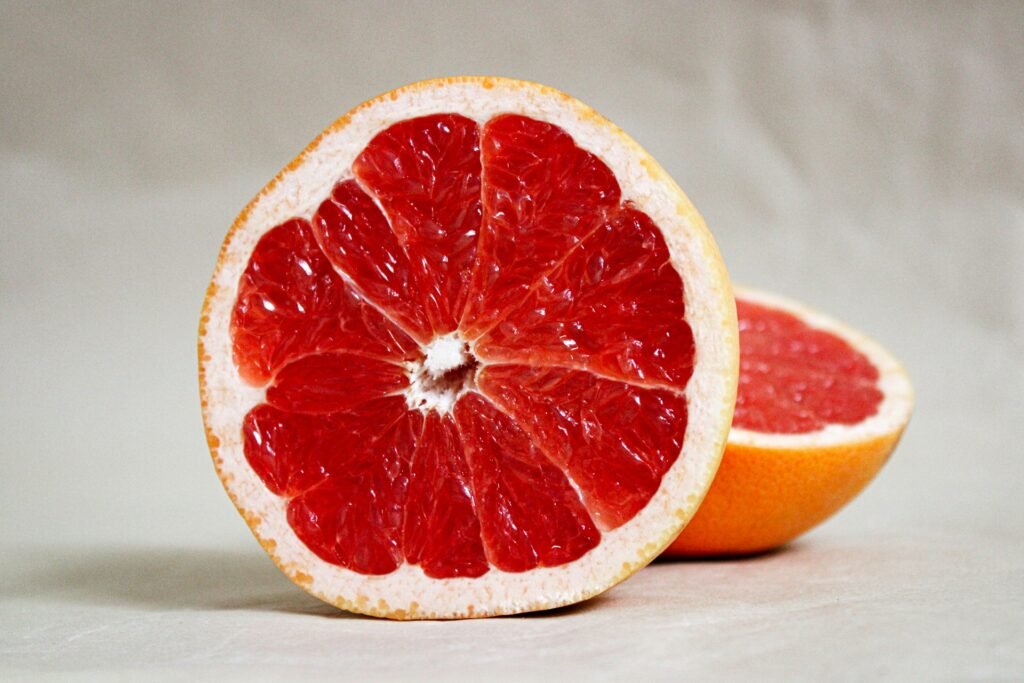
Grapefruit may seem like an ordinary cocktail ingredient, valued mainly for its bitterness, acidity and ability to balance sweeter flavours. In pharmacy, however, it is known for something far more clinically significant: its ability to alter the way certain medicines are processed by the body.
After an oral drug is swallowed, it does not simply enter the bloodstream unchanged. It must first pass through several stages of pharmacokinetics: absorption, distribution, metabolism and elimination, often summarised as ADME. These stages determine how much of the drug reaches the body, how long it remains active and how safely it can produce its intended effect.
One particularly important stage is first-pass metabolism. After absorption in the intestine, some drugs are partially broken down by enzymes in the intestinal wall and liver before reaching systemic circulation. A key enzyme involved in this process is CYP3A4, part of the cytochrome P450 enzyme family, which metabolises many commonly prescribed medicines.
Grapefruit contains natural compounds called furanocoumarins, which can inhibit CYP3A4 enzymes in the intestinal wall. When this enzyme activity is reduced, less of a susceptible drug may be metabolised before it enters the bloodstream. This can increase the drug’s bioavailability, meaning a larger proportion of the dose reaches systemic circulation in an active form.
The result is clinically important: the same prescribed dose may lead to a higher-than-expected drug concentration in the body.
This matters because drug doses are carefully designed to remain within a safe and effective range. Many medicines have a therapeutic window, where concentrations are high enough to produce the intended therapeutic effect but low enough to avoid toxicity. If grapefruit increases drug exposure, this balance can shift, increasing the risk of adverse effects.
The interaction is not the same for every medication. Its significance depends on several factors, including how strongly the drug relies on CYP3A4 metabolism, the dose taken, the patient’s individual enzyme activity, and the amount and frequency of grapefruit consumption. This is why grapefruit warnings appear for some medicines but not others.
Timing can also be more complicated than expected. Simply separating grapefruit and medication by a few hours may not always prevent the interaction, because furanocoumarins can cause prolonged inhibition of intestinal CYP3A4. Normal enzyme activity may only return once new enzymes are produced.
For pharmacists, this makes grapefruit a useful example of why patient counselling matters. Safe medicine use is not only about prescribing the correct drug and dose; it also depends on understanding the patient’s diet, lifestyle, other medicines and possible risk factors. A food that appears harmless can become relevant if it changes how a medicine is absorbed or metabolised.
Grapefruit therefore illustrates a broader principle in pharmaceutical science: medicines do not act in isolation. Food, alcohol, supplements and other drugs can all influence absorption, metabolism and elimination.
Alcohol provides another familiar example. Depending on the medication, it may increase sedation, alter metabolism or worsen adverse effects. This is particularly important with medicines affecting the central nervous system, where combined effects can impair alertness, coordination and safety.
From a mixology perspective, ingredients are usually selected for flavour, aroma and balance. From a pharmacy perspective, some of the same ingredients can behave as biologically active substances that influence drug response.
A grapefruit cocktail may therefore involve more than taste chemistry. It can also reveal how enzymes, bioavailability, therapeutic windows and patient counselling all shape the real-life effect of a medicine inside the body.