
Have you ever wondered why it’s so easy to fall into routines? Whether it’s checking your phone every morning and night, tying your shoes in the same way every time, sticking to your daily schedule, habits shape a very large part of our lives and it isn’t just about our character or discipline, it is deeply connected with our brains.
A brain structure called basal ganglia plays a huge role in repeating behaviors. Our brains are most active when learning something new or in areas responsible for decision-making and focus. As you repeat the action, the brain begins to place the movement into a routine. As time passes, control shifts from conscious thinking to the basal ganglia, which lets the action to become automatic.
This process is efficient in using energy since the brain normally consumes a lot of energy so it is trying to conserve as many resources as possible. Our brains do this by turning repeated actions into habits as a result of reducing the need for decision-making.
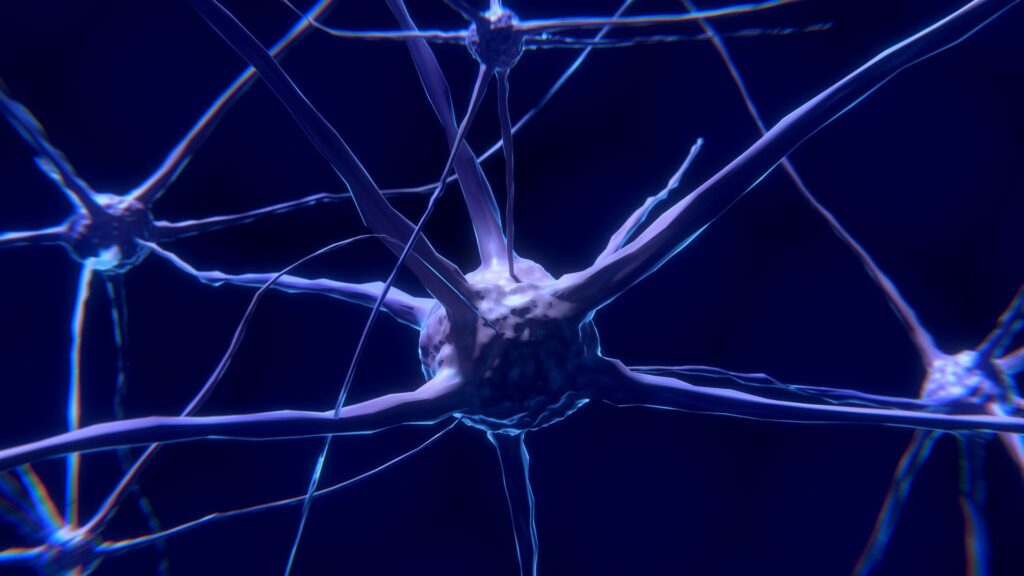
Myelination is another factor for energy-saving. Myelination is the process where your brain wraps nerve fibers with a fatty substance called myelin. Think of it like insulation around electrical wires. The more myelin you have, the faster and more efficiently signals travel through your brain.
Every time a movement or a thought is repeated, a specific neural pathway is activated and strengthened by adding more of that fatty substance around it. This also helps us save from energy ny making the signals traveling more quicker by using less effort.
Dopamine is a neurotransmitter associated with reward and motivation that plays crucial role in this process. It is released when we perform an action with a positive outcome, creating satisfaction. Over time, the brain begins to expect the reward and this makes us more likely to repeat the same action.
Interestingly, the brain can not distinguish much between good or bad habits, it simply reinforces what is being repeated and also rewarded. So changing our bad habits might be challenging. Our brains do not exactly erase our bad habits but replace them with others so it is suggested to substitute a bad habit with a better one while keeping the same reward.
As a result, this repetition that our brains love doing isn’t a weakness, it’s a tool that can be a powerful advantage to reshape our routines with ones that support our performance improvements and goals.
Bibliography
- https://www.psychologytoday.com/us/blog/the-main-ingredient/202509/harnessing-the-power-of-repetition-for-good-and-evil#:~:text=Key%20points,Source:%20Gerd%20Altmann%20/%20Pixabay
- https://godwinibe.org/en/press/blogs/why-your-brain-loves-repetition#:~:text=When%20constructive%20thoughts%20are%20repeated,brain’s%20most%20powerful%20learning%20tools.
- https://michiganpsychologicalcare.com/blog/the-science-of-affirmations-how-repetition-changes-your-brain.php#:~:text=Neuroplasticity%20is%20defined%20as%20the,automatic%20after%20repetition%20over%20time.