
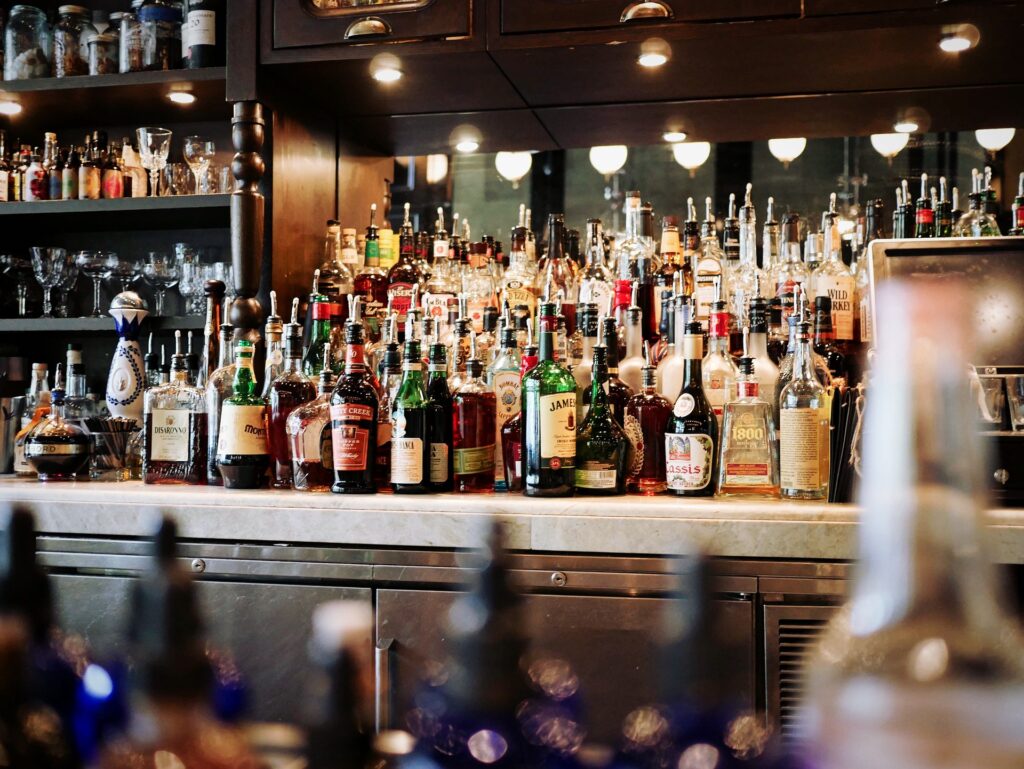
Most people think cocktails are about alcohol.
They’re not.
At least, not for me.
The appeal of mixology has never been the drinking itself. What fascinates me is the process. The methodology. The quiet ritual hidden behind every well-made drink.
There is something deeply satisfying about taking several ordinary ingredients and combining them with enough care that they become something greater than the sum of their parts.
A few millilitres too much lime juice and the balance disappears. Shake for too little and the texture feels unfinished. Add too much ice and the drink becomes diluted; too little and it remains warm and harsh.
A cocktail rewards precision.
Ironically, this is what makes it relaxing.
On summer evenings, I often find myself preparing a drink in the backyard while the sun slowly disappears behind the trees. Somewhere in the background, a house playlist is playing softly. Nothing dramatic is happening. Nobody is rushing anywhere.
The process itself becomes the point.
A simple Daiquiri is perhaps the best example.
60 ml white rum.
30 ml fresh lime juice.
15 ml simple syrup.
Only three ingredients.
Yet every bartender knows how difficult it is to make well. Because there is nowhere to hide. Every variable matters. Freshness. Temperature. Dilution. Balance.
It reminds me of a principle that appears everywhere in life: simplicity demands excellence.
The same can be said for an Old Fashioned.
Bourbon.
Sugar.
Bitters.
That’s it.
No elaborate garnish. No theatrical presentation.
Just a handful of ingredients arranged with intention.
And perhaps that is why I enjoy mixology so much. It teaches patience in a world obsessed with speed.
At first glance, making cocktails seems artistic. And it is. But beneath the creativity lies science.
Citrus changes acidity. Sugar alters perceived bitterness. Ice controls dilution and temperature simultaneously. Aromatic compounds evaporate at different rates depending on temperature and alcohol concentration.
A good cocktail is not an accident.
It is chemistry made visible.
The more I learned, the more I realized that craftsmanship often lives in places we overlook. Not only in laboratories, workshops, or operating rooms, but also in kitchens, cafés, and behind cocktail shakers.
What makes an experience memorable is rarely extravagance.
More often, it is intention.
The decision to use freshly squeezed juice instead of bottled juice.
The decision to measure instead of guessing.
The decision to spend ten extra seconds doing something properly.
These details seem insignificant in isolation.
Together, they create excellence.
And perhaps that is the lesson I keep returning to.
Whether making a cocktail, studying, learning a skill, or building relationships, outcomes are rarely determined by grand gestures.
They are determined by small acts of care repeated consistently.
A well-made drink lasts fifteen minutes.
The habits that create it can last a lifetime.